

























































Quick Summary:
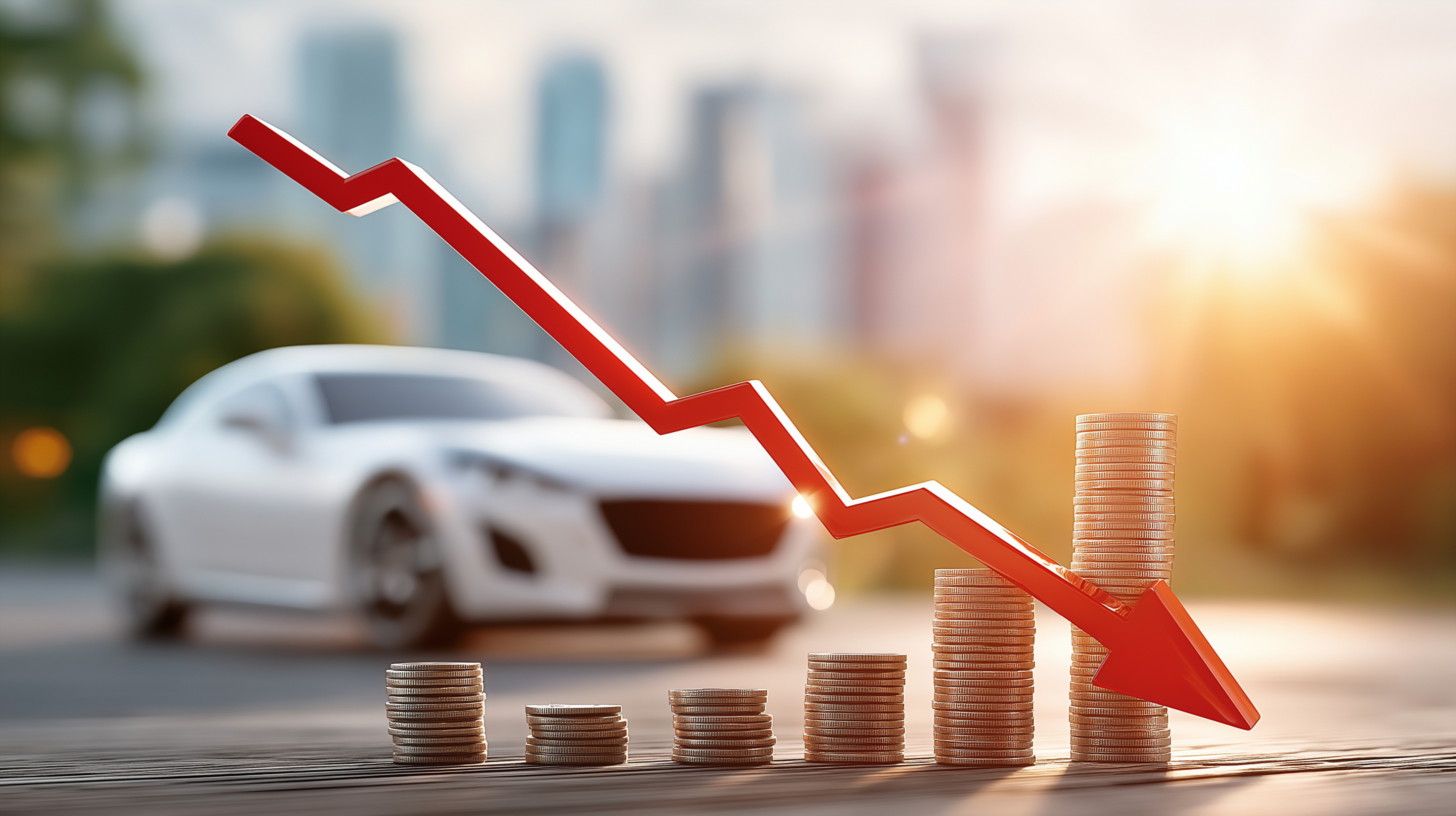
- Definition: Vehicle depreciation rate refers to the decrease in a car’s value over time.
- Factors Affecting Vehicle Depreciation: Key factors include age, wear and tear, market conditions, accidents, and type of transmission.
- Calculating Vehicle Depreciation Rate: The vehicle depreciation rate can be calculated using either the Prime Cost Method or the Diminishing Value Method.
- Impact of Vehicle Depreciation: Vehicle depreciation rate has an impact on resale value, and it also influences the overall cost of ownership.
- Vehicle Depreciation Rate Change: The vehicle depreciation rate varies by vehicle category and time frame.
- Managing Vehicle Depreciation Rate: The effect of vehicle depreciation can be mitigated through smart purchasing strategies and practical maintenance tips.
Get Quick & Easy Vehicle Loans with Mahindra Finance

Purchasing a vehicle is just the first step. Understanding its maintenance and value retention is important for grasping the financial implications of vehicle ownership. Vehicle depreciation refers to the reduction in your car’s value that begins the moment you drive it out of the showroom.
Understanding vehicle depreciation rates can help you plan your finances better. This article covers what vehicle depreciation is, how it works, and how it affects you as a vehicle owner.
What is Vehicle Depreciation Rate?
When you purchase a vehicle, it inevitably loses value over time. This is called vehicle depreciation – the decreasing value of a vehicle in the market. Understanding vehicle depreciation rates is important for both buyers and sellers.
Definition of Vehicle Depreciation
Vehicle depreciation is a measurable reduction in the vehicle’s market value over time. Every vehicle has a different depreciation rate depending on its model, performance, market demand, and other factors. Unlike normal wear and tear, vehicle depreciation focuses on the financial aspect of vehicle ownership.
Factors Influencing Vehicle Depreciation Rates
The main factors influencing vehicle depreciation rates include:
- Age: As vehicles get older, they naturally lose value due to technological advances and changing consumer preferences.
- Wear and Tear: The physical condition of the vehicle significantly affects its depreciation rate. This includes mileage, maintenance history, and general upkeep.
- Market Demand: Vehicles with high market demand retain their value better than those with lower demand. Popular models with good fuel efficiency and reliability tend to depreciate more slowly.
- Accidents: Any accident history can substantially impact a vehicle’s depreciation rate, even after repairs.
- Type of Transmission: Manual and automatic transmissions may depreciate differently based on market preferences and reliability factors.
- Fuel Type: In India, diesel cars typically depreciate faster than petrol cars due to stricter emission norms, maintenance expenses, consumer preferences and changing government policies. CNG vehicles often hold better value in metro cities due to lower running costs.
How Vehicle Depreciation Rates are Calculated
Understanding vehicle depreciation rates is important for grasping the financial aspects of vehicle ownership. As a vehicle owner, you should know that your vehicle will lose value over time, regardless of other factors. By calculating depreciation rates, you can understand the actual financial value of your vehicle.
Methods of Calculating Depreciation
When you buy a vehicle, it depreciates every year. Here are two methods of calculating vehicle depreciation rates:
Diminishing Value Method (Written-Down Value Method)
This method assumes a car loses more value in the early years and less in later years.
The formula is: Annual Depreciation = Depreciation Rate (%) x Book Value at the beginning of the year
Example: For a ₹10,00,000 car with a 20% depreciation rate, Year 1 depreciation is 20% of 10,00,000 = ₹2,00,000. The new value is ₹8,00,000. Year 2 depreciation is 20% of 8,00,000 = ₹1,60,000.
Prime Cost Method (Straight Line Method)
The prime cost method assumes that a vehicle loses its value at a fixed rate every year.
The formula is: Annual Depreciation = (Purchase Price – Salvage Value) / Useful Life in Years
Example: If a car costs ₹10,00,000, has a useful life of 10 years, and an estimated salvage value of ₹1,00,000, the annual depreciation is (10,00,000 – 1,00,000) / 10 = ₹90,000 per year.
What is the difference between market depreciation and insurance depreciation?
Market depreciation refers to the actual reduction in your vehicle’s resale value, while insurance companies use insurance depreciation (IDV) for claim settlements. Insurance depreciation follows IRDAI’s standardized rates, while market depreciation can vary based on demand, condition, and regional factors. Often, market depreciation is lower than insurance depreciation, especially for popular models
Suggested Read: 7 Most Common Car Loan Mistakes To Avoid
IRDAI Depreciation Schedule for Insurance Purposes
For car insurance claims in India, the Insurance Regulatory and Development Authority of India (IRDAI) has established standardized depreciation rates:
- 0-6 months: 5% depreciation
- 6 months to 1 year: 15% depreciation
- 1-2 years: 20% depreciation
- 2-3 years: 30% depreciation
- 3-4 years: 40% depreciation
- 4-5 years: 50% depreciation
- Beyond 5 years: Assessed based on market value
This standardized schedule ensures consistency across insurance companies and provides a clear framework for claim settlements.
Tools and Resources for Tracking Depreciation
Vehicle owners today don’t have to rely on assumptions about their vehicle’s depreciation rate. Several tools and resources are available to help track depreciation rates. Finance and insurance companies offer calculators and digital platforms that can be used to track the depreciation value of different types of vehicles. Additionally, professional appraisers can help determine vehicle depreciation rates.
Why Vehicle Depreciation Matters to You
Purchasing a vehicle might be a significant decision, both financially and emotionally. While you focus on finding the right model with modern features and considering the upfront cost, it’s important to understand the vehicle’s declining value as well.
Vehicle depreciation rate matters because it impacts the resale value of your car and influences the overall cost of ownership.
Impact on Resale Value
The depreciation rate of your vehicle impacts the resale value you will receive years later. Even if you don’t plan to resell your vehicle within a few years, its performance will inevitably start to deteriorate, typically after nine or ten years. In such situations, understanding the depreciation value of a vehicle becomes important. Factors such as your vehicle’s condition and brand reputation affect the resale value.
Pro Tip: To manage vehicle depreciation rate, consider following practical tips like regular servicing and diligent driving, and maintaining detailed records.
Influence on Cost of Ownership
When purchasing a vehicle, factors such as the vehicle’s cost, additional features, fuel efficiency, and fuel costs are typically considered, but the vehicle depreciation rate is often overlooked. Vehicle depreciation significantly influences the overall cost of ownership.
For instance, a vehicle that costs ₹10 lakhs at the time of purchase might be worth only ₹7 lakhs three years later. This ₹3 lakh loss represents a hidden cost that affects your total ownership expense.
In the Indian context, the total cost of ownership includes:
- Vehicle depreciation (largest component)
- Fuel costs (significant due to rising fuel prices)
- Insurance premiums
- Maintenance and servicing costs
- Registration and renewal fees
- Toll charges and parking fees
Where Vehicle Depreciation Hits Hardest
Understanding vehicle depreciation rates also means knowing how different types of vehicles are affected by factors such as market value, performance, maintenance, and accident records over time. Several factors contribute to vehicle depreciation rates, including vehicle category, timing, and other variables.
Comparing Different Vehicle Categories
Different vehicle categories experience varying depreciation trends:
- Luxury Vehicles: High-end luxury vehicles tend to face steep depreciation primarily due to high import duties, expensive spare parts, and limited service networks.
- Mass Market Vehicles: Mass market vehicles tend to retain their value better than luxury and electric vehicles because of consistent market demand, accessible servicing and maintenance, and fuel efficiency.
- Electric Vehicles: While electric vehicles have historically experienced rapid depreciation in initial years due to rapidly evolving battery technology, the trend is changing. Newer EV models with longer driving ranges are holding their value better. As battery technology improves, market demand increases, and the used EV market matures, depreciation rates for EVs are expected to stabilize.
Time Frames of Significant Depreciation
Time frames play a role in determining vehicle depreciation rates. In most cases, vehicles face steeper depreciation in the first few years after purchase. This period is known as the depreciation cliff. Studies suggest that cars lose around 20 to 30% of their value in the initial two years.
General Indian market depreciation timeline:
- First 6 months: 15-20% depreciation (steepest drop)
- Year 1: Total 25-30% depreciation
- Years 2-3: Additional 15-20% depreciation
- Years 4-5: Depreciation rate stabilizes to 8-12% annually
- Beyond 5 years: Depends on condition and maintenance
How to Mitigate the Effects of Vehicle Depreciation
Every vehicle depreciates. As a vehicle owner, you can reduce the speed at which your vehicle depreciates. Here are some practical strategies that can help mitigate the effects of vehicle depreciation rates.
Purchasing Strategies
Here are some purchasing strategies to consider:
- Choose Brands With A Good Resale Reputation: Some brands have a reputation for good resale values. These vary from region to region.
- Check Resale Value: Research the historical resale value of the vehicle category and brand. Market data is available to help you understand resale values.
- Focus on Long-Term Value: Car purchasing is a long-term commitment. Prioritize vehicles with good performance and sustainable value over those with just appealing features and styling.
- Opt for Popular Models: Models known for fuel efficiency, affordable servicing and maintenance, and high market demand are good options for reducing depreciation rates.
- Choose Popular Colors: In India, white, silver, and grey cars typically have better resale value compared to unconventional colors.
Maintenance and Care Tips
Regular vehicle maintenance is important not only for performance but also for reducing depreciation rates. Here are some maintenance and care tips:
- Drive Carefully: Drive responsibly to avoid accidents that can result in car damage and unwanted modifications. This also protects your vehicle from excessive wear and tear.
- Follow Servicing Schedule: Never miss a servicing window and maintain detailed records of all maintenance work.
- Monitor Mileage: Vehicles with reasonable mileage have better resale value. Maintain appropriate mileage for your vehicle’s age and type.
- Use Authorized Service Centers: For the first few years, always service at authorized centers to maintain warranty and service records.
- Keep All Documentation: Maintain original purchase invoice, insurance papers, PUC certificates, and service records meticulously.
Suggested Read: What is car loan refinancing? All you need to know
Conclusion
Vehicle depreciation rate is an integral part of understanding the finances of vehicle ownership. Rather than focusing only on factors such as upfront cost, styling, features, and model, it’s important to pay attention to the resale value of the car as well.
Need help understanding the finances of purchasing and maintaining a vehicle? Mahindra Finance offers flexible financing options tailored to meet the needs of every customer. Whether it’s navigating through vehicle financing or funding your dream vehicle, Mahindra Finance provides comprehensive solutions, including Car Loan, Commercial Vehicle Loan, Used Car Loan, Utility Vehicle Loan, and Loan Against Vehicle.
FAQs On Vehicle Depreciation Rates
Q1. What is the car depreciation rate for income tax purposes in India?
In India, tax benefits on a car loan, including claiming depreciation, are available only for self-employed individuals and businesses that use the vehicle for commercial purposes. Salaried employees cannot claim these benefits for a car purchased for personal use. For eligible cases, the depreciation rate is 15% annually. However, if the vehicle is used for less than 180 days in the first year, depreciation is restricted to 50% of the normal rate.
Q2. Why do luxury cars lose so much value so quickly?
Luxury cars suffer steep depreciation due to high import duties, high maintenance costs, fuel inefficiency, limited demand in the secondary market, and high purchase prices.
Q3. What vehicles have the lowest depreciation rates?
Depreciation rates differ from one model to another. However, vehicles with mass market demand, fuel efficiency, affordable maintenance, and good mileage tend to have lower depreciation rates.
Q4. How can I get an accurate depreciation rate for my vehicle?
To get an accurate depreciation rate for your vehicle, you can use either the diminishing value method or the prime cost method. You can also rely on online platforms and calculators designed to calculate vehicle depreciation rates.
Q5. Does car color affect depreciation rates?
Although the effect of car color on depreciation rates is minimal, it exists. Vehicles with unusual colors tend to have lower market demand. In India, white cars typically have the best resale value, followed by silver and grey. Bright or unusual colors, such as yellow, orange, or purple, may depreciate faster due to limited buyer preference.
Q6. Are electric vehicles subject to different depreciation rates?
Electric vehicles have historically depreciated faster than conventional vehicles due to rapidly advancing technology. However, the landscape is evolving. As battery technology stabilizes, driving ranges improve, and the used EV market matures, depreciation rates for electric vehicles are expected to become more comparable to conventional vehicles.
DISCLAIMER: Market depreciation rates can vary significantly based on brand, model, and regional factors.
- Verify the depreciation rate of 15% annually for vehicles used for business or professional purposes, along with the stipulation that if the vehicle is used for less than 180 days in the first year, the depreciation is restricted to 50% of the normal rate.
- Diesel cars typically depreciate faster than petrol cars due to stricter emission norms. Confirm if this factor remains relevant in light of any recent changes to emission norms or government policies.
- Ensure the IRDAI depreciation schedule for insurance purposes is up-to-date and aligned with recent regulatory changes.
- Cross-verify any claims about market depreciation trends for various vehicle types and categories with the current market data and trends.



 Quick Pay
 Apply Now
 Grievance & Support